
Behind the Scenes: How Om Namkeen Maintains Quality & Safety
- Home
- Behind the Scenes: How Om Namkeen Maintains Quality & Safety
Introduction
Tear open a pack of namkeen, and you’re maybe ten seconds away from that first crunch. What you don’t see in those ten seconds is everything that came before it: the sourcing calls made weeks earlier, the hands that sorted the sev, the person who tasted that exact batch before it was ever sealed.
We get asked a lot, especially by newer customers, what actually goes on behind our packaging. Fair question. So we thought we’d pull back the curtain and walk you through it properly, not the polished version, but how it really works on our floor, day to day.
Inside Our Production Facility
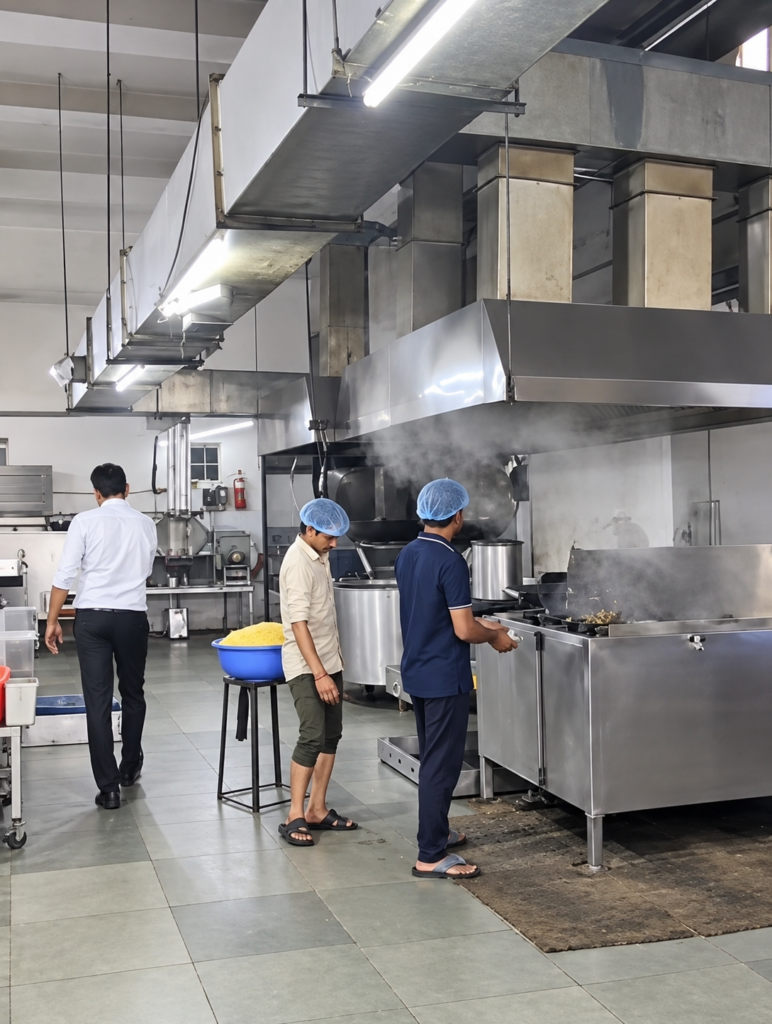
Everything starts long before anything hits the fryer. Our sourcing team works with suppliers we’ve built relationships with over years, not months, and every batch of pulses, spices, and oil that comes through our doors gets checked for freshness before it’s even allowed into storage. If something doesn’t look or smell right, it doesn’t make the cut, no exceptions, no matter how tight the production schedule is that week.
On the floor itself, we’ve kept the recipes traditional but modernised the process around them. Our team wears gloves and hairnets as standard, and surfaces get cleaned multiple times throughout the day, not just at opening and closing. The equipment we cook on lets us hold temperature and timing steady across a batch, which sounds like a small thing until you realise it’s the difference between a namkeen that tastes the same every time and one that’s a bit of a gamble.
It’s a strange balance, honestly, staying loyal to recipes that are decades old while running a facility built on very modern standards. But that’s exactly the balance we’ve tried to get right.
The Quality Checks You Never See
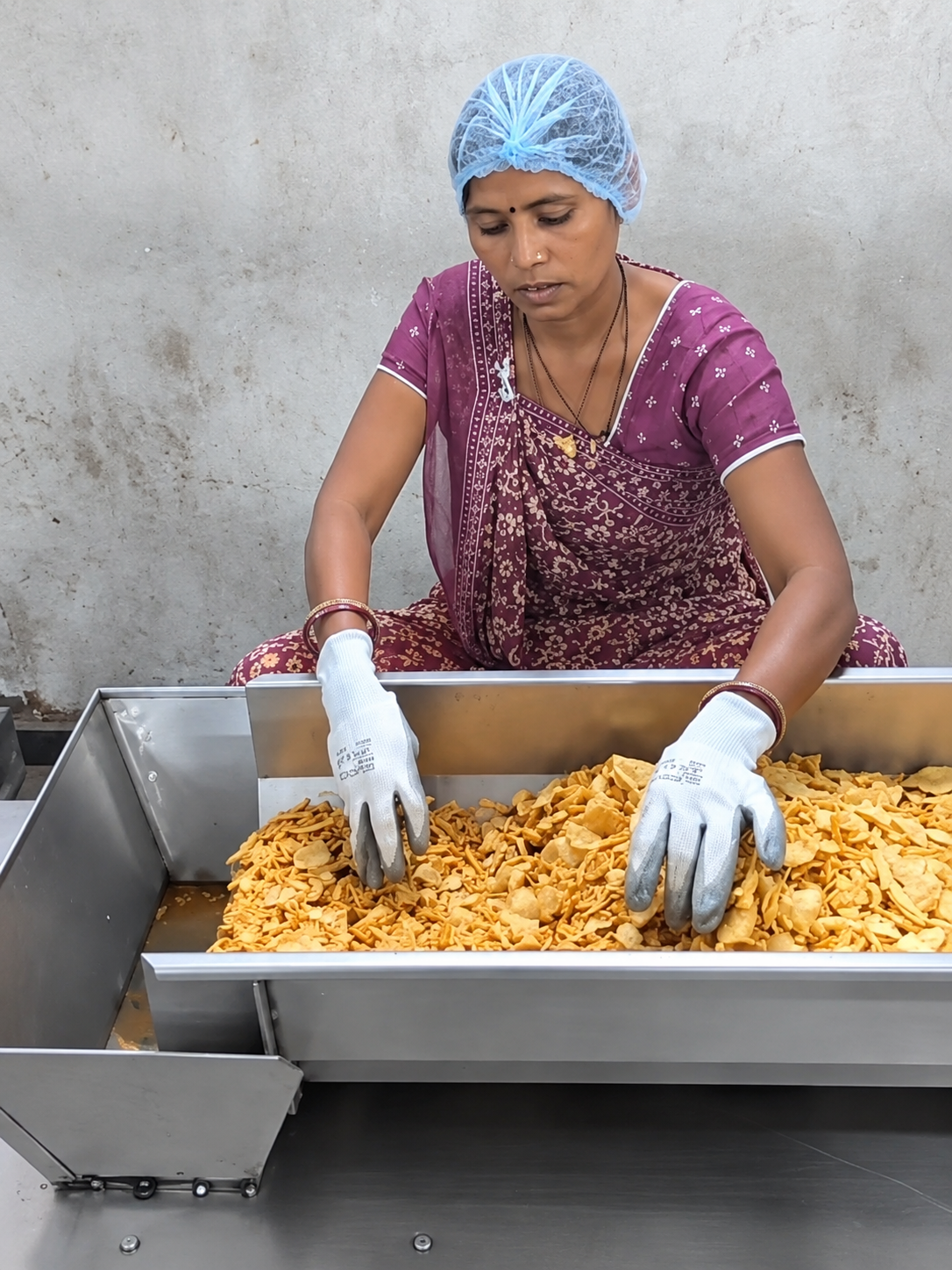
Here’s something people are often surprised to learn: quality control at Om Namkeen isn’t one inspection at the end. It happens at almost every point along the way.
Raw materials get tested the moment they arrive: moisture levels, freshness, the works. While a batch is actually cooking, our quality team is checking oil condition and temperature at intervals, not just trusting the machine to do its job unsupervised. And before anything gets anywhere near a packet, we check the batch for taste, texture, and aroma. If a batch tastes even slightly off from what it should, it doesn’t go out; it gets pulled.
We also log every batch we produce, so if a customer ever flags an issue, we can trace it right back to the exact production run, the exact day, sometimes even the exact ingredient lot. It’s not glamorous work, but it’s probably the most important thing we do that you’ll never see mentioned on the packet.
Why Our Certifications Actually Matter?
We hold an FSSAI license, and we’re ISO-certified, and we know that, to most people, those are just letters on a label. But they represent real audits, real documentation, and real accountability.
FSSAI compliance means we’re meeting the food safety standards set for every food business in India, from ingredient sourcing to how the final product is handled and labelled. ISO certification goes a step further, meaning our processes are consistent enough to be measured against international benchmarks, not just “good enough for now.”
None of this is about ticking a compliance box for us. It’s the paperwork trail behind a promise: that what’s in the pack matches what we say is in the pack, every single time.
What Happens After Cooking: Packaging & Storage
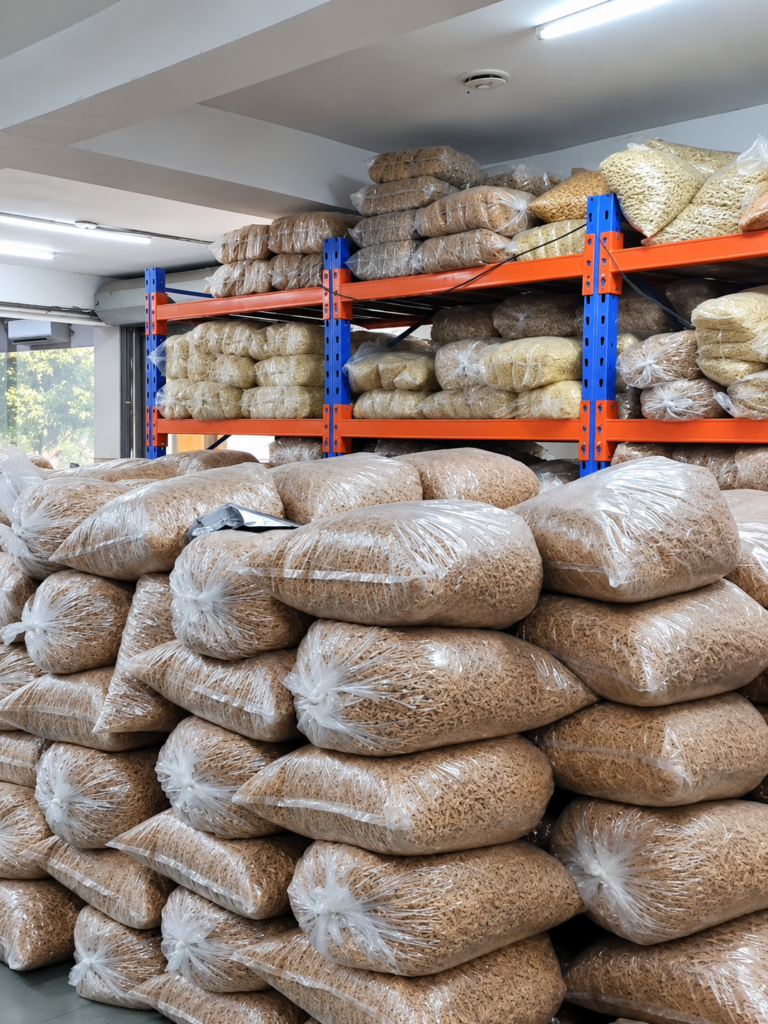
A namkeen can be made perfectly and still lose its magic if it’s packed or stored badly; anyone who’s opened a stale packet knows that disappointment. So we treat this stage with almost as much care as the cooking itself.
Our packaging is airtight and food-grade, built to keep moisture and air out so the crunch you expect is the crunch you get, whether you’re opening the pack the same week or a few weeks later. For certain products, we use nitrogen flushing to extend shelf life naturally, without leaning on preservatives to do that job instead. Every pack is also clearly labelled with ingredients and dates, because you shouldn’t have to guess what you’re eating or how fresh it is.
From there, our warehouses are kept at controlled temperature and humidity, and we try to keep the journey from our facility to your nearest store as short and simple as possible. Fewer stops, less handling, less time in transit, all of it adds up to a fresher product landing in your hands.
Conclusion
None of this is the kind of thing that shows up in an advertisement. It’s slower, quieter work: sourcing decisions, temperature logs, tasting notes, packaging tests, the sort of detail that only really matters when it’s missing.
So the next time you’re snacking on Om Namkeen, know there’s a fair bit standing behind that packet: people who checked it, tested it, and stood by it before it ever reached you. That’s not something we’re looking to change anytime soon.
